

Guides

20 Aug 2026
THE SHORT EXPLANATION
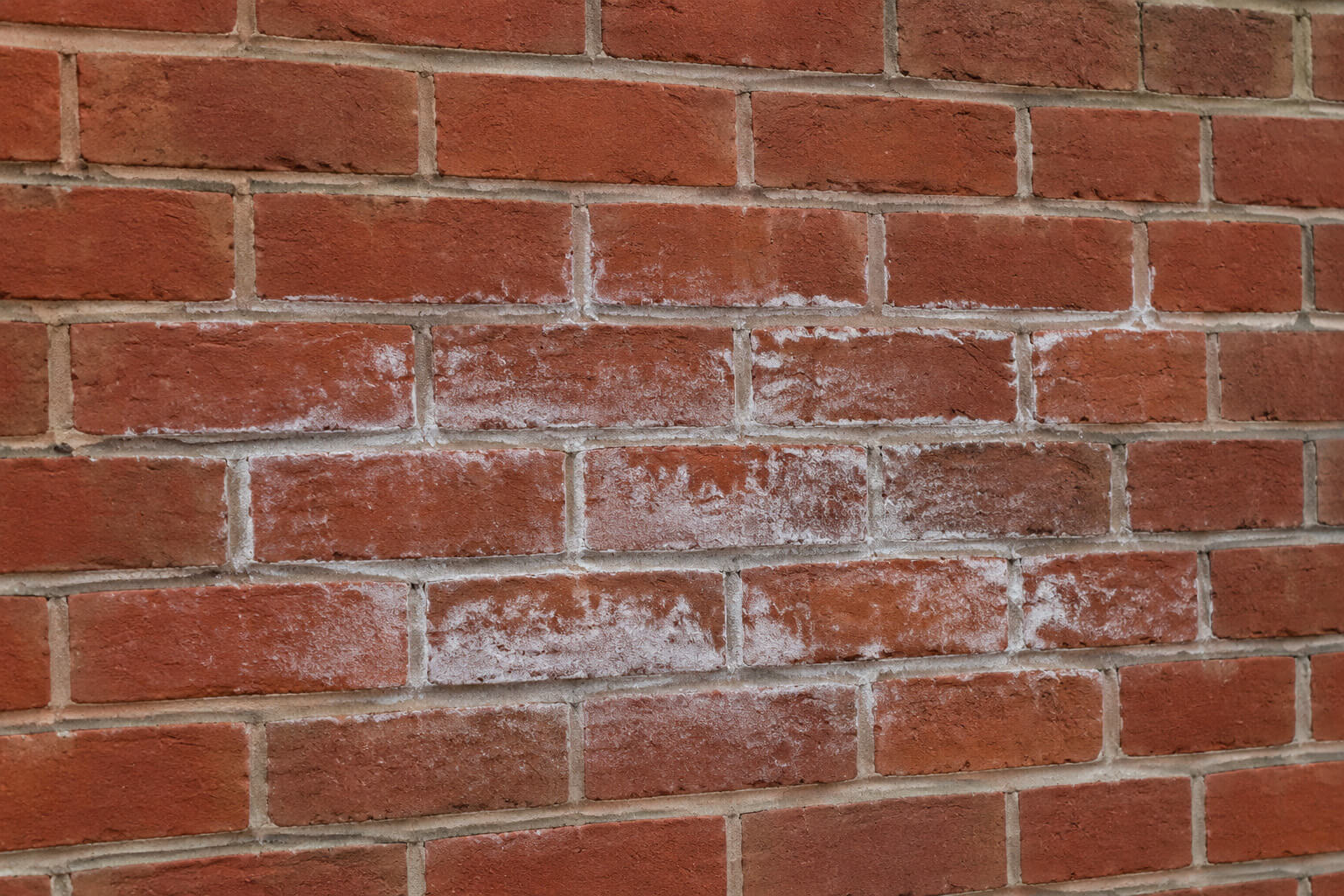
Water dissolves naturally occurring salts in mortar ingredients. The salt-bearing water moves through the brickwork. When the water reaches the surface and evaporates, the salts remain behind.
1 SOLUBLE SALTS
Often associated with mortar ingredients—cement, lime and sand—but they may also be present in bricks, backing materials, soil or other materials in contact with the wall.
2 MOISTURE
Rain, wet mortar, rising damp, leaking pipes, sprinklers, poor drainage or unprotected wall tops can provide the water needed to dissolve the salts.
3 A PATH TO DRY
The solution travels through pores in the brick or mortar. Evaporation at the surface leaves the salt deposit visible.
Ordinary surface efflorescence is generally harmless and often diminishes as new masonry dries and the available salts are exhausted. Persistent, heavy or recurring deposits are different: they can be a useful warning that excess moisture is entering the wall and the source should be investigated.
In new brickwork, the most visible ‘building bloom’ commonly develops as moisture from construction and early weather exposure moves soluble material—often from mortar—towards the drying face of the wall. It may appear as a light haze, a rim around the brick edges or heavier crystalline patches.
For ordinary dry, powdery efflorescence, the first treatment should normally be dry removal—not acid and not aggressive pressure washing. Cleaning before the masonry is fully dry can simply dissolve the salts and carry them back into the wall.
LET THE WALL DRY
Wait for a period of dry weather and allow the brickwork to dry thoroughly. On new work, do not rush to clean while moisture is still migrating through the masonry.
TEST AND IDENTIFY
Choose a small, inconspicuous area. Confirm the deposit is loose and powdery. If it is hard, glossy, coloured, greasy or unaffected by brushing, it may be a different stain.
DRY BRUSH FIRST
Use a clean, stiff, non-metallic brush. Work from the top down and collect or vacuum the dry residue where practical. Wear eye protection and a suitable dust mask.
MONITOR
Allow the wall to remain dry and observe it. A light new-build bloom may recur once or twice and then stop as the available salts are depleted.
ESCALATE CAREFULLY
If deposits persist, first find and correct the moisture source. Then obtain product-specific advice from the brick supplier or use a Think Brick-accredited masonry cleaner. A proprietary cleaner matched to the identified deposit and brick type is safer than improvised chemistry.
Remove the dry deposit, but solve the water problem. If the moisture source remains, efflorescence is likely to return.
20 Aug 2026

06 Aug 2026
28 Nov 2024

14 Oct 2024

19 Jun 2024

20 May 2024
04 Mar 2024