Get in Touch
Forged by hand,
Finished by fire

Our bricks find their home where character is non-negotiable.

Reach out to explore our full range of textures, custom pricing structures, and heritage applications for your next landmark build.

Begin with the existing building

Successful heritage brickwork is not simply a matter of choosing a vaguely “old-looking” red brick. Its character comes from the interaction of clay, forming method, firing, mortar, bond and workmanship. Each element must be considered together.

For restoration, alterations or additions, the original brickwork should be the reference point. Record:

  • brick dimensions, including natural variations;
  • the range and distribution of colours;
  • face and edge textures;
  • the proportion of dark, pale and over-fired bricks;
  • the brick bond and coursing;
  • mortar colour, aggregate and joint profile; and
  • distinctive details such as rubbed arches, corbelled courses or patterned headers.

Do not select a replacement brick from a single sample. Historic walls should be assessed from several metres away as well as close up. The objective is to match the character of the wall as a whole—not merely its average colour.

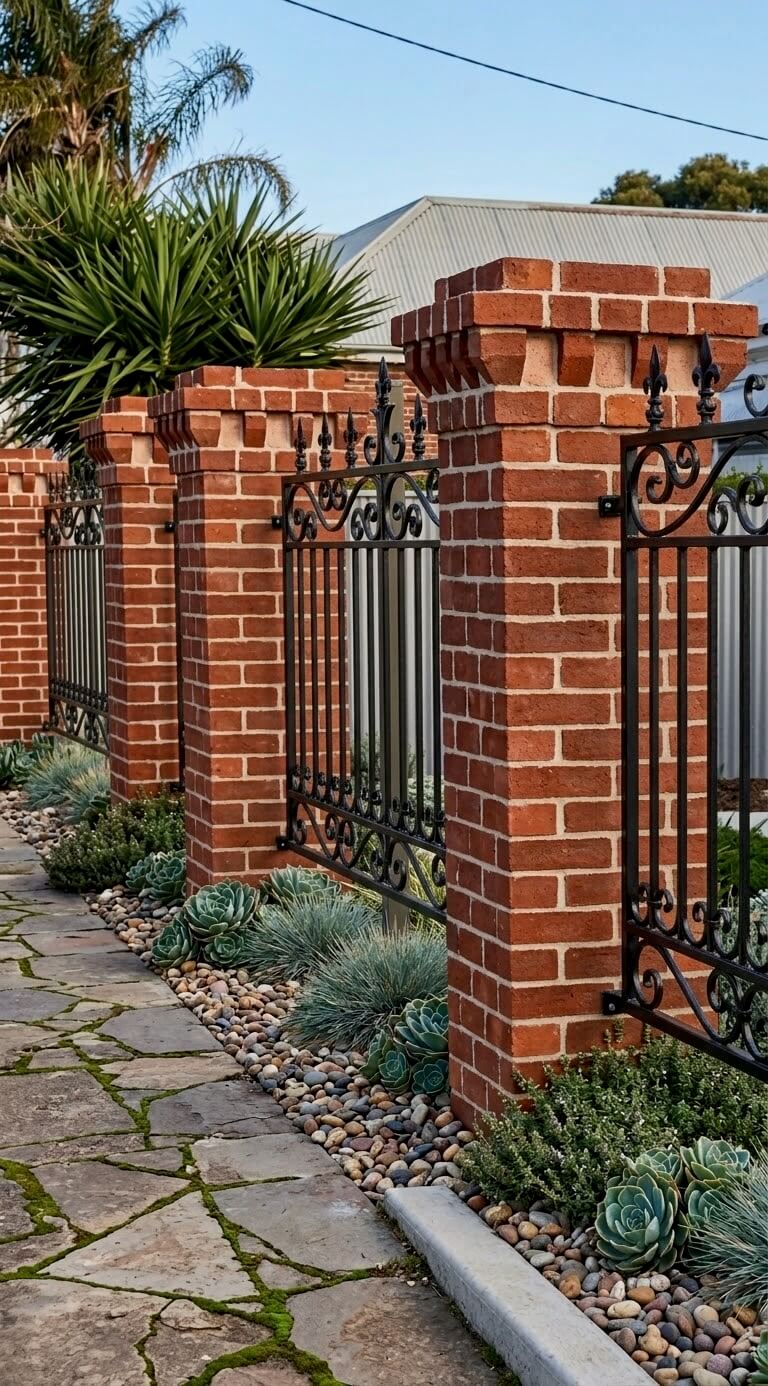
Federation Weathered Red Brick

Colour variation should come from the making and firing

Traditional bricks were fired in clamps and kilns where temperature, airflow and oxygen varied throughout the setting. Bricks close to the greatest heat could become dark red, purple, blue or partly vitrified, while those in cooler areas remained softer shades of orange, red or brown.

This produced a lively but coherent range of tones. The variation was not a decorative coating applied after manufacture: it was a consequence of the clay and firing process and therefore formed part of the brick itself. Heritage guidance records colour ranges extending from orange-red to very dark purple-red and blue within a single body of traditional brickwork.

A suitable heritage brick should therefore have:

  • tonal variation within individual bricks as well as between bricks;
  • depth and complexity rather than a flat, uniform surface colour;
  • occasional darker or more strongly fired units where appropriate;
  • natural transitions between colours; and
  • variation that remains believable across an entire elevation.

Avoid ranges that rely on a small number of sharply contrasting colours mixed together to manufacture an artificial “mottled” effect. Traditional variation is usually irregular and nuanced, not evenly scattered or visibly formulaic.

Modern extruded bricks fired in highly controlled gas kilns are designed for consistency. Manufacturers can blend colours, apply sand, distress edges or add surface treatments, but these measures do not reproduce the same through-body variation created by local clay, variable atmosphere and differential heat in a traditional firing. They may imitate the appearance from a distance, but close inspection often reveals repeated textures, uniform arises and colour concentrated at the surface.

Specify a genuine moulded texture

Texture is as important as colour. A heritage wall should respond softly to light, with small shadows and irregularities across its surface. Crisp, mechanically repeated faces generally appear too hard and precise beside traditional masonry.

Sandstock bricks

A true sandstock brick is formed in a mould dusted with sand, which allows the clay to release. The process creates a granular, matt surface, softened edges and slight variations in shape. The term derives from this traditional use of sand in the moulding process.

Look for:

  • a naturally sanded, open face;
  • softly defined corners and arises;
  • creases, folds and moulding marks, elephant skin texture;
  • subtle differences from brick to brick; and
  • a texture produced during forming, rather than embossed onto an extruded face.

“Sandstock” is sometimes used loosely as a style description. Ask how the brick is actually formed. An extruded brick with applied sand or mechanical distressing is not equivalent to a moulded sandstock brick.

Waterstruck bricks

Waterstruck bricks are also moulded, but water rather than sand acts as the release agent. This creates a comparatively smooth yet undulating face, often with folds, lip marks, drag marks and softly irregular edges.

A convincing waterstruck brick should show:

  • flowing, organic surface movement;
  • restrained creasing rather than a heavy artificial pattern;
  • soft reflections and shadows across the face;
  • natural differences between units; and
  • irregularities that follow the movement of wet clay.

The Brick Development Association distinguishes wire-cut or extruded bricks—with their precise, crisp finish—from moulded stock bricks and waterstruck bricks, whose character results directly from their forming methods.

Federation Weathered Red Brick
A traditional handmade waterstruck brick with folds, lip marks, drag marks of genuine waterstruck brick.
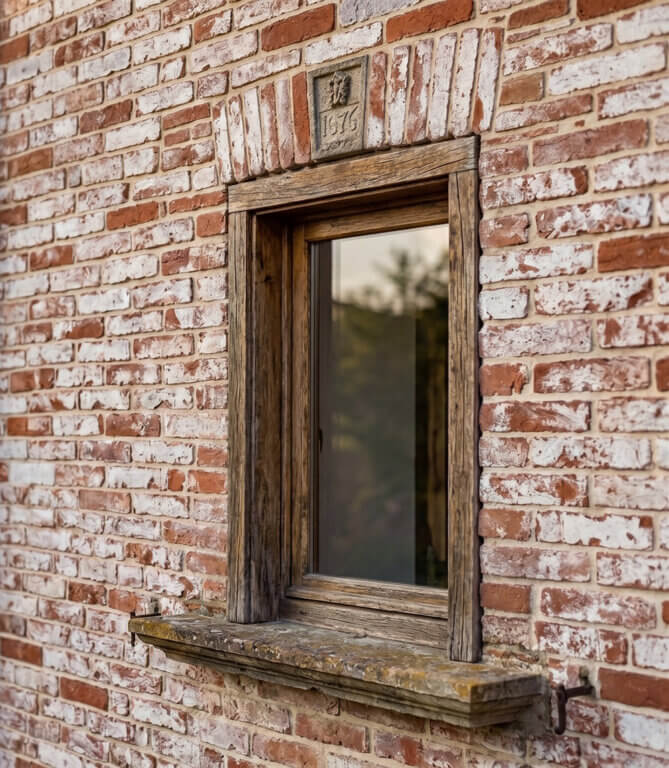
Stacked Heritage Red 1 bricks
Subtle colour variation and true moulded textures of a genuine sandstock brick.

Avoid repeated artificial textures

Mechanical rollers and patterned dies can give extruded bricks a rustic face, but repetition often becomes obvious once the bricks are laid. Warning signs include:

  • identical dents or creases appearing across multiple bricks;
  • uniformly rounded or chipped edges;
  • colour sitting mainly in surface recesses;
  • directional drag lines caused by extrusion; and
  • an exaggerated “antique” texture that competes with the architecture.

A good heritage brick has controlled irregularity. It should not look damaged, theatrical or deliberately aged.

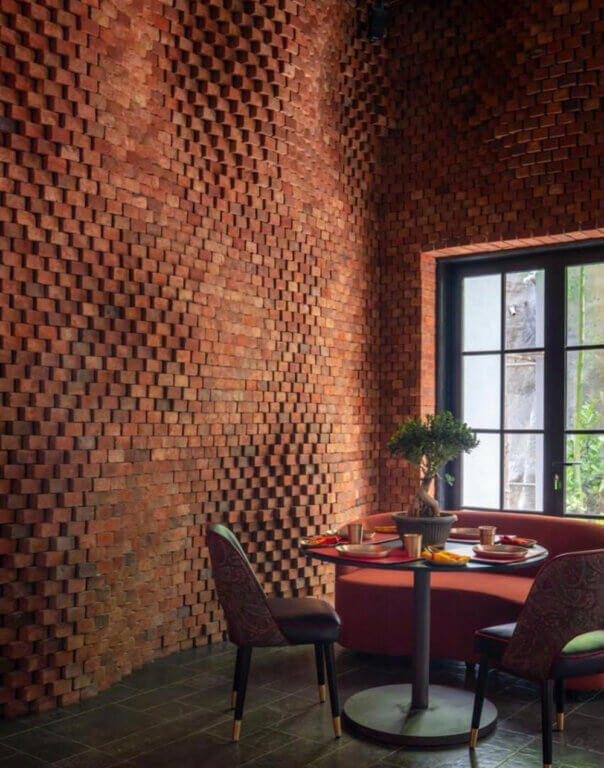
Hsr Urban 1 bricks
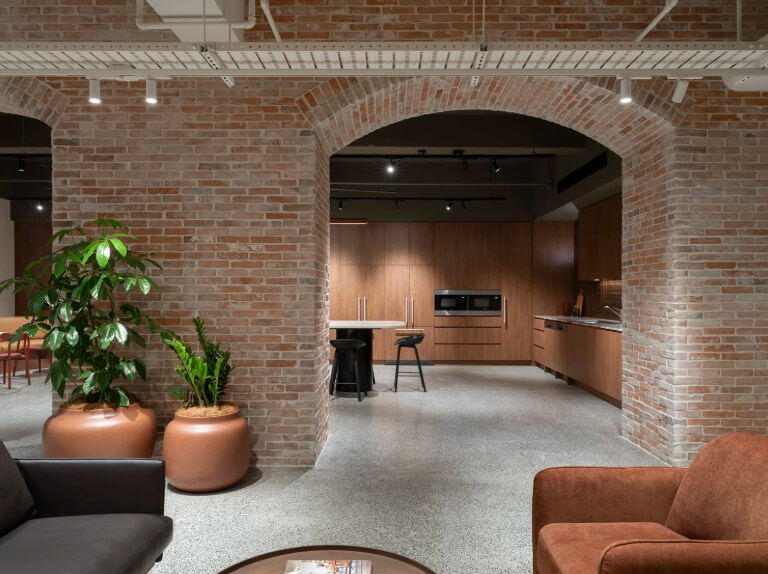
Federation Weathered Red Brick

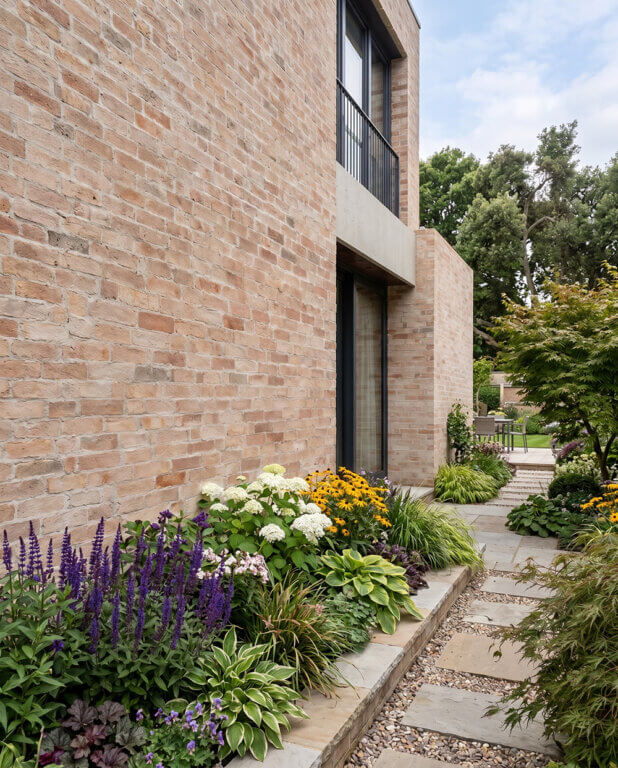
Getting heritage brickwork right means respecting how traditional walls acquired their character. Clay, moulding, firing, mortar and the bricklayer’s hand all leave visible evidence. When those qualities are replaced by uniform extrusion, controlled gas firing and applied surface effects, the result may suggest age—but it rarely possesses the depth, subtlety and authenticity of properly made heritage brick.

Comparison of Heritage bricks
A heritage match almost 200 years in the making. The expansion joint is the only clear divide between the original brickwork and our brand-new Heritage Sandstocks—carefully matched in colour, texture and character to sit naturally alongside the past.