

Guides

20 Aug 2026
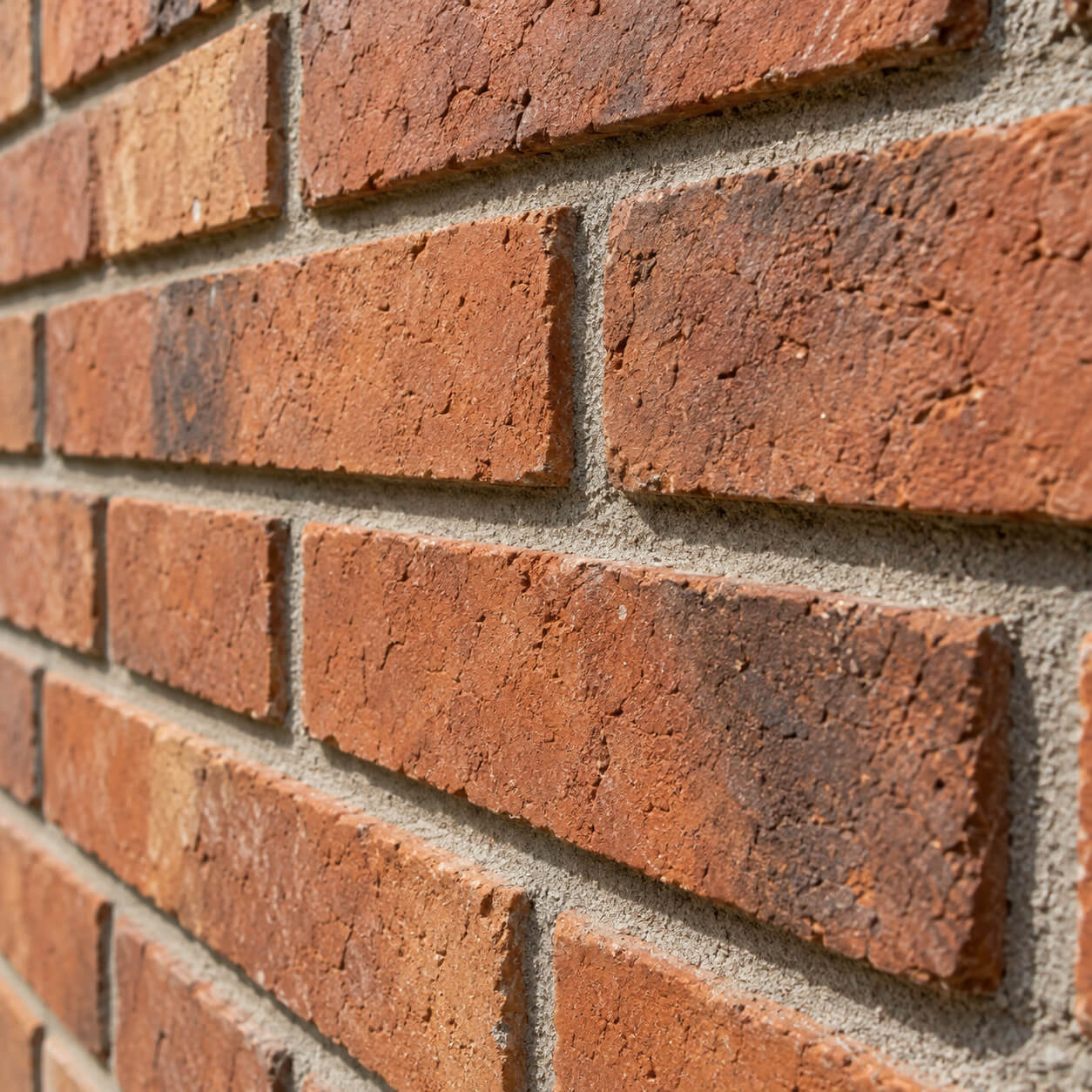
Raked mortar joints have become the default finish on many bricklaying jobs, but common does not necessarily mean good or even best. In our view, they are often chosen because they are quick and familiar, rather than because anyone has considered how the finished wall should look and perform. A deep rake throws the joints into shadow and draws the eye to a dark grid of mortar lines. With handmade bricks, that grid can compete with the colour, texture and character of the bricks themselves.
The joint also has a practical job to do. On exposed brickwork, a deeply recessed horizontal joints creates a ledge where rainwater can linger, this promotes water penetration into walls and in areas that experience sub-zero temperatures, can lead to frost shattering. On white bricks, in particular, dirt and dust collects on these ledgers, when it rains, this dirt is then flushed from the joint to stain the wall.
Raking away mortar does not compact its exposed surface against the brick in the way a properly tooled joint does. The Brick Industry Association’s guidance advises against raked joints for exterior work for these reasons.
Good brickwork starts with a deliberate choice of joint profile. For many of our handmade and reclaimed bricks, we prefer a full, flush joint, often finished with a wet sponge, because it gives the wall a more cohesive appearance and lets the bricks take centre stage. If not this a half round tooled joint is also a good option. A deep rake should never be treated as the automatic finish simply because it is what the bricklayer usually does, they never represent good brick work.
20 Aug 2026

06 Aug 2026
28 Nov 2024

14 Oct 2024

19 Jun 2024

20 May 2024
04 Mar 2024